


 EN
 RU
 ES
 ZH
 FR
 DE
 PT
 AR
 HI


C++ FAQs: Frequently Asked Questions about C++
C++ FAQs: Frequently Asked Questions about C++
Summary:
Introduction
The book "C++ FAQs" (authors: Marshall Cline, Greg Lomow, Mike Girou) was published in 1998, but it still remains one of the most authoritative reference books on the C++ language. It is not a textbook for beginners, but a collection of in-depth answers to real questions that programmers encounter in their work. The book is structured in a "question-answer" format, making it an ideal desktop companion for those who already write in C++ and want to understand complex topics.
What is this book about?
"C++ FAQs" covers virtually all aspects of the language, from basic constructs to the intricacies of object-oriented design and templates. The main focus is not on syntax, but on the correct application of C++ features. The book is divided into thematic sections, each containing dozens of questions with detailed answers, code examples, and explanations.
Main topics:
- Classes and objects: constructors, destructors, assignment operators, copying.
- Inheritance and polymorphism: virtual functions, abstract classes, multiple inheritance.
- Templates: generic programming, specialization, STL.
- Memory management: new/delete, smart pointers, exceptions.
- Design: RAII idiom, Pimpl, rule of three/five.
- Compatibility with C and code migration.
Who is this book for?
The book is intended for experienced programmers who already know C++ syntax and want to deepen their understanding of the language. Beginners will find it difficult due to the lack of a step-by-step introduction. However, for those who have already encountered real problems (memory leaks, inheritance ambiguity, template performance), "C++ FAQs" will be a real find.
What will the reader learn?
- How to properly design class hierarchies, avoiding common mistakes.
- Why virtual destructors are important and when to use them.
- How smart pointers work and how they prevent leaks.
- What is the difference between static and dynamic binding.
- How to effectively use templates and the STL.
- How to ensure exception safety in your code.
- How to migrate from C to C++ without losing performance.
Strengths of the book
1. FAQ format. Each question is a real problem from practice. Answers are given clearly, with examples and explanations of "why this way and not another."
2. Depth. The authors do not just list rules, but explain the motivation of the language and standard developers.
3. Emphasis on design. The book teaches not only how to write code, but also how to design application architecture in C++.
4. Code examples. All examples are working, many of them can be adapted for your own projects.
5. Does not lose relevance. Despite the year of publication, 90% of the material is applicable to modern C++11/14/17 standards, as the fundamentals of the language have not changed.
Who is recommended?
The book will be useful for:
- Developers transitioning from C to C++.
- Programmers wanting to systematize their knowledge.
- Team leads and architects designing high-load systems.
- Anyone preparing for an interview for a C++ developer position.
If you are looking for a book that answers the questions "why?" and "how to do it right?", and not just "how to do it?" — "C++ FAQs" will be an excellent addition to your library.
Recommendations
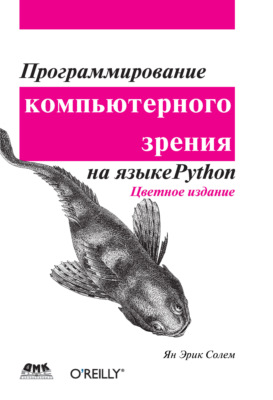
Computer Vision Programming with Python
Algorithms and Data Structures in TypeScript
Concurrency in Java: From Basics to Multithreaded Applications
Clean Code in Rust: Principles and Practices of Idiomatic Programming
GraphQL in C++: Developing Efficient and Flexible APIs
Rust for Data Science: Performance and Safety in Data Analysis