


 EN
 RU
 ES
 ZH
 FR
 DE
 PT
 AR
 HI


Professional Java: Advanced Techniques
Professional Java: Advanced Techniques
Summary:
The book "Professional Java: Advanced Techniques" is not another introduction to syntax. It is a practical guide for those who already write confidently in Java and want to understand how the platform works "under the hood." The author, Andrey Kuznetsov, a senior developer with 12 years of experience, shares techniques that are usually learned over years of trial and error.
What this book is about
The material covers four key areas of professional Java development:
- Multithreading and concurrency — from the subtleties of the Java Memory Model (JMM) to building non-blocking algorithms and working with ForkJoinPool. Real-world cases are analyzed: thread pools, async/await on CompletableFuture, false sharing issues.
- Internal structure of the JVM — how the garbage collector works (G1, ZGC, Shenandoah), what safepoints, bytecode, and JIT compilation are. You will learn to interpret GC logs and configure the virtual machine for specific tasks.
- Reflection, annotations, and code generation — creating your own DI containers, proxy objects via java.lang.reflect.Proxy, working with the module system (JPMS) and classloaders.
- Profiling and optimization — practical use of JFR, async-profiler, VisualVM. How to find bottlenecks, measure latency, speed up application startup, and reduce memory consumption.
Who this book is for
- Java developers with 2+ years of experience who want to move to the Senior/Team Lead level.
- Those preparing for technical interviews at large companies (FAANG, top banks, product startups).
- Engineers maintaining high-load systems who want to deeply understand JVM behavior in production.
What you will learn after reading
- How to write thread-safe code without locks (Lock-Free structures, atomic variables).
- Why your GC is not working efficiently and how to fix it.
- How to use reflection without losing performance.
- Which metrics to collect in production and how to analyze CPU/Heap profiles.
- How to speed up compilation and build (Gradle/Maven) using modern tooling.
Each chapter contains code that can be run in an environment with Java 17+ (LTS), as well as exercises for reinforcement. The book is written in a lively language, without excessive academicism — only what will really be useful in practice.
"Professional Java: Advanced Techniques" is your chance to stop being a "user" of the language and become an architect who understands every byte of executable code.
Recommendations
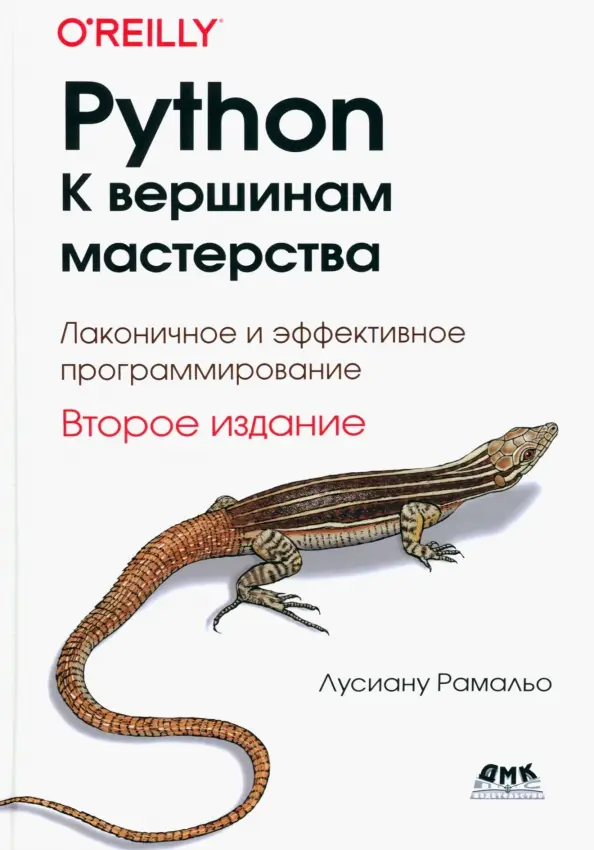
Python. Fluent Python. Concise and Efficient Programming

Web Application Development Using Flask in Python
Java: Tips and Best Practices — Professional Recipes
Swift (iOS/macOS) and Docker: Application Containerization
Go (Golang) and Kubernetes: A Complete Course on Microservice Development and Orchestration
Kotlin: Tips and Best Practices